The first question I ask a mitzvah family is not about the party. It is whether anyone has asked the synagogue what a photographer is actually allowed to do during the service.
Most families assume that if they hire a photographer, the photographer shoots. Then they find out a few weeks before the date that their congregation does not permit photography in the sanctuary at all, and the pictures they had in their head are suddenly not happening.
Every Congregation Sets Its Own Rules
There is no single rule for this. Some synagogues are fine with me working quietly from the back of the sanctuary. Some allow it only from one fixed position, no flash, no moving during the Torah service. And many, particularly for a service held on Shabbat, do not permit photography in the sanctuary at all, because a camera falls under the same restrictions as any other electronics that day.
None of that is a problem when you know in advance. All of it is a problem when you find out that morning.
Call the synagogue office directly, not just the event coordinator wherever the party is being held. If your rabbi has a preference, that preference is the rule. In my experience rabbis are glad to talk it through when the question comes early and respectfully, and the answer is often more flexible than families expect.
If Photography Is Not Allowed, You Still Get the Pictures
This is the part families do not realize. A no-photography service does not mean a thin gallery.
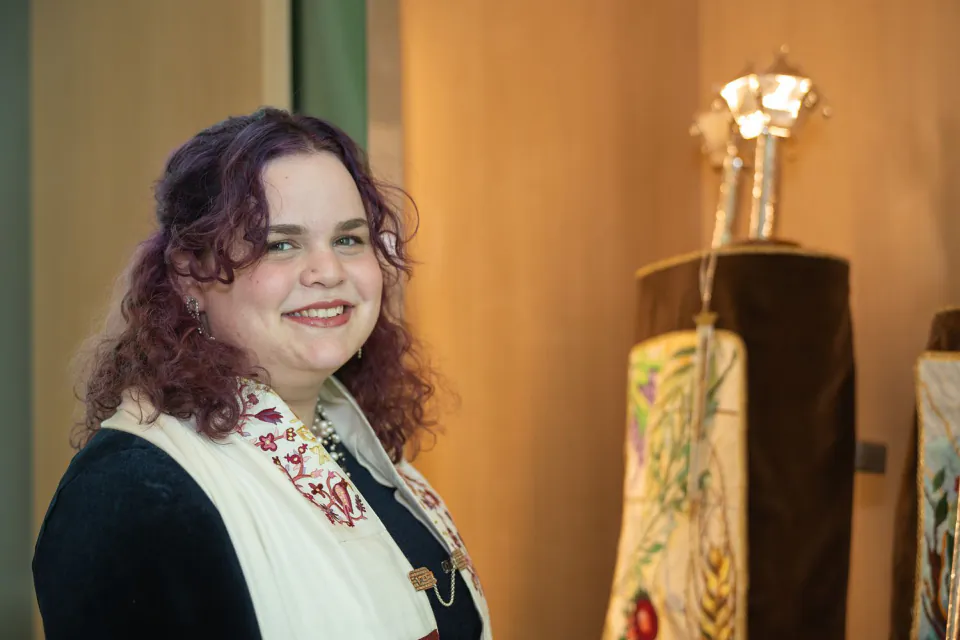
Ask the rabbi for a short session on the bimah before guests arrive, or after the service ends. Fifteen or twenty minutes is usually plenty. Your child in their tallit, the Torah if the rabbi permits handling it, parents and grandparents, the sanctuary itself. Nobody is rushing, the room is quiet, and I can actually light it properly instead of shooting from a corner in whatever light the room happens to have.
Then the rest of the day is wide open. Arrivals, the hugs in the lobby, the Kiddush, and every bit of the party afterward. The restriction covers the service. It does not cover the simcha.
The Wide Bimah Shot Is Rarely the One You Keep
Even at synagogues where I can photograph the service, the frame families come back to is almost never the wide shot of the bimah.
It is the look your kid gives you right after the Torah reading, when they find your face in the room. It is your mother's expression during the d'var Torah. It is the exhale afterward, when they realize they actually did it. I wrote more about that in what makes great b'nai mitzvah coverage.
Those moments happen whether or not I am allowed to stand in the aisle. Knowing the rules early is simply what lets me plan for where I need to be when they do.
What to Ask Before the Date
- Is photography permitted in the sanctuary during the service?
- If it is, where may the photographer stand, and may they move during the Torah service?
- Is flash allowed? Assume no, but ask.
- May we schedule a portrait session on the bimah before or after the service?
- May the Torah be held for a portrait, and does someone from the clergy need to be present?
- Are there restrictions specific to Shabbat that would not apply on a different day?
- Does the synagogue record the service, and how does the family get a copy?
Bring those answers to your photographer as early as you can. It is one phone call, and it is the difference between someone improvising in a room they do not understand and someone who walked in already knowing exactly where to be and when.
If you are planning a bar or bat mitzvah in South Florida and want to talk through how coverage would work at your synagogue, I would be glad to connect. You can also read through my FAQs or see more b'nai mitzvah work here.